

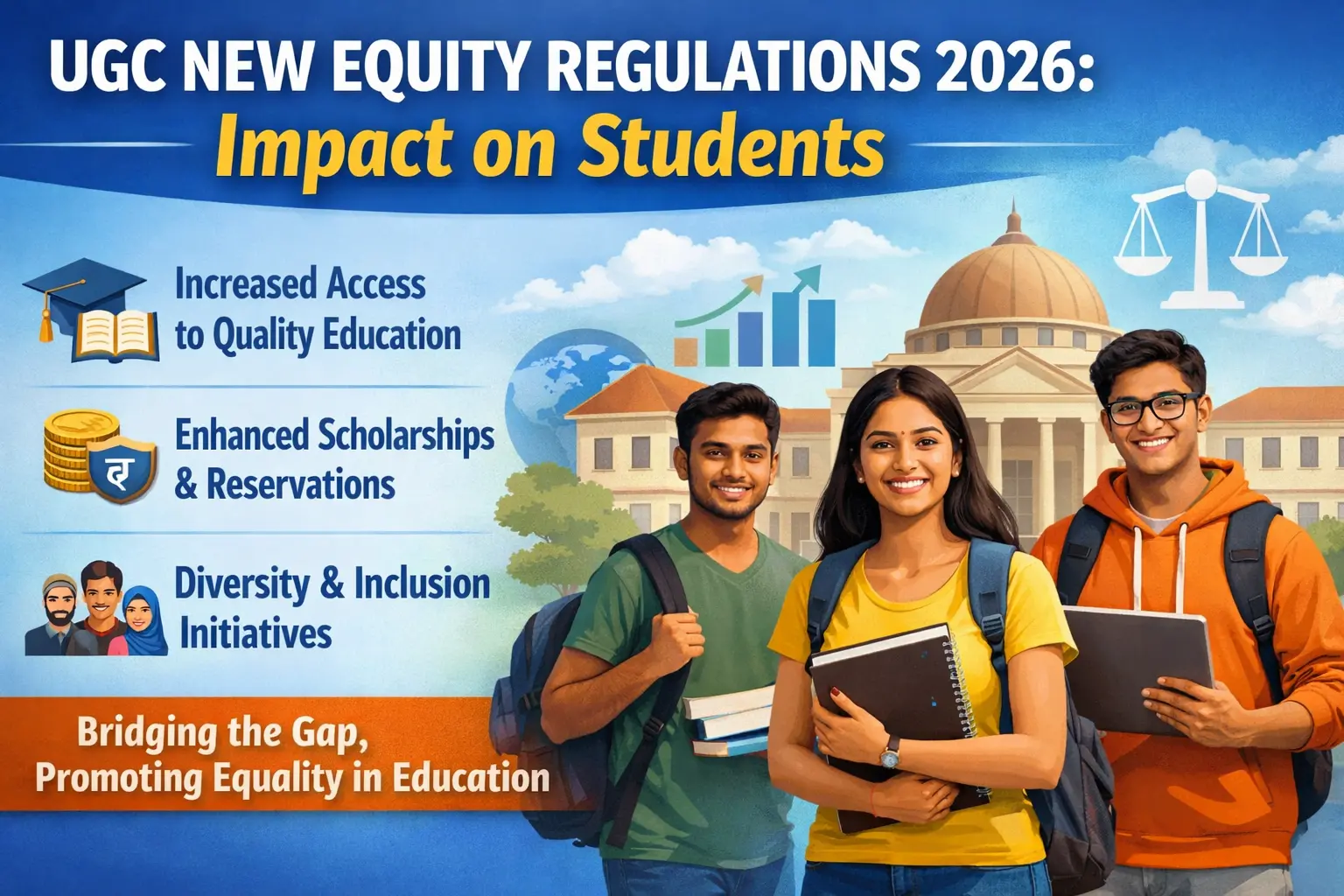
The University Grants Commission (UGC) introduced the Promotion of Equity in Higher Education Institutions Regulations, 2026, on January 13, 2026, to address discrimination on campuses, especially caste-based biases. As a student pursuing higher education like CUET PG, these rules directly reshape your academic environment, grievance processes, and social interactions through mandatory institutional mechanisms.
Core Objectives and Mechanisms
The regulations mandate every university and college to establish an Equal Opportunity Centre (EOC) and Equity Committee, including representatives from SC, ST, OBC, EWS, PwD, and minority communities. These bodies handle complaints of discrimination based on caste, gender, disability, region, or economic status within 30 days, with appeals to UGC. Equity Squads patrol campuses for proactive monitoring, while 24/7 helplines allow anonymous reporting. Institutions submit bi-annual equity reports, facing funding cuts or derecognition for non-compliance. This updates the 2012 guidelines with stricter timelines and penalties, inspired by cases like Rohith Vemula.
Benefits for Marginalized Students
If you belong to reserved categories (SC/ST/OBC/EWS/PwD), the rules provide robust safeguards previously lacking. Complaints about hostel segregation, casteist remarks in class, or biased grading receive priority investigation, counseling, and remedies like fee waivers or transfers. Women and LGBTQ+ students gain protections against intersectional harassment, with dedicated cells offering scholarships and mentorship. Campus life improves through mandatory diversity training, reducing dropout rates—UGC notes a 20% rise in such incidents yearly. For CUET PG aspirants from underprivileged backgrounds, this ensures fairer exam center allotments and admission quotas, easing access to top universities like JNU or DU.
Drawbacks for General Category Students
General category students face unintended challenges from broad “discrimination” definitions, sparking nationwide protests (#UGCRollback). Fear of frivolous complaints—lacking upfront penalties—deters participation in group projects, debates, or faculty questioning, creating a “chilling effect” on free speech. Hostel and mess allotments prioritize equity, potentially delaying your preferences. Protests have disrupted classes in states like Uttar Pradesh and Rajasthan, risking semester delays. Supreme Court stayed implementation on January 29, 2026, amid PILs citing Article 14 equality violations, but revival could heighten peer tensions and self-censorship.
Changes to Daily Campus Life
Classrooms shift toward moderated discussions; faculty avoid sensitive topics like caste history to prevent complaints. Equity Squads conduct surprise audits on events, clubs, and libraries, ensuring representation but adding paperwork—organizing fests now requires diversity checklists. Hostels enforce anti-bias roommate policies, fostering inclusion yet straining privacy. Student elections see equity audits on manifestos, curbing populist rhetoric. Positive shifts include better mental health support via helplines, reducing stress for all. In Jaipur’s Rajasthan University, early cells already handle 50+ queries monthly, signaling rapid rollout.
Academic Performance and Opportunities
Grievance focus diverts faculty time, potentially slowing research supervision or project feedback. Reserved students access priority internships and scholarships, boosting their employability; others gain “equity training” certifications for resumes, valuable in diverse workplaces. Exam processes like CUET PG gain fairness checks, minimizing proxy biases in evaluation. However, polarized campuses harm collaborative learning—group scores drop if conflicts arise. Long-term, inclusive environments prepare you for global jobs, but short-term disruptions threaten GPAs.
Fee and Admission Implications
No direct fee hikes, but non-compliant colleges lose UGC grants, possibly raising student costs indirectly. Admissions emphasize equity audits; CUET PG 2026 counseling prioritizes verified complaints, affecting merit lists. Reserved seats remain protected, but general quota faces stricter verification to curb misuse.
Social and Psychological Effects
Friendships navigate caution—casual jokes risk reports, straining bonds. Marginalized peers feel empowered, reporting subtle biases freely; others experience reverse bias perceptions, fueling resentment. Mental health improves overall via proactive squads, but stigma around complaints isolates users. Jaipur students report mixed vibes: safer for some, surveillance-like for others.
Legal and Implementation Status
Supreme Court stay pauses rollout, giving time for revisions. UGC may clarify vague clauses like “perceived discrimination.” Students should track updates via university notices—Jaipur NTA/UGC offices offer clarifications.
Strategies to Navigate as a Student
Document all interactions (emails, notes) for defense. Use official channels over social media rants. Join equity committees voluntarily for influence. Focus on studies amid noise—CUET PG prep unaffected directly. Advocate balanced rules via student unions.
Broader Educational Reforms Alignment
Ties to NEP 2020’s inclusion push, complementing CUET uniformity. Long-term: Diverse campuses enhance innovation; short-term: Adjustment pains.
Future Outlook
If revived post-stay, expect phased rollout with training. Protests may force dilutions, benefiting balance. As a CUET PG student, prioritize accuracy in forms (per prior corrections guide) while monitoring equity impacts on admissions.